Commercial Waste Removal in Forest Hill
Commercial waste removal in Forest Hill should be straightforward, well organised and suited to the realities of everyday business premises. We handle the clearance of mixed non-hazardous waste from offices, shops, workshops, hospitality spaces and managed properties, helping customers keep working areas clear without turning disposal into a disruption. The focus is on practical removal, sensible sorting and a service that fits routine trade needs as well as one-off clearances.
That can include bulky items, packaging, redundant fixtures, general commercial rubbish and other waste streams that build up when a site is refitted, reorganised or simply kept in use. Our approach is to remove what has been agreed, keep the process orderly and leave customers with a clearer picture of what is going, what needs separate handling and what should stay onsite. For a direct quotation, the next step is simple.
Forest Hill businesses often need a service that is flexible enough to deal with a single loading bay collection, a back room clear-out or a larger planned clearance. We work with that kind of requirement by focusing on the items listed, the access available and the disposal route required. Clear scope, clear removal and clear pricing factors make the arrangement easier to manage for offices, landlords and operators alike.
Business premises and day-to-day clearance
Business waste removal is usually most useful when it can be fitted around opening hours, loading restrictions and the practical layout of the premises. Offices may need old desks, chairs, files and storage units taken away; retail spaces may need display fittings, cardboard, damaged stock packaging or obsolete shopfitting materials removed; and shared buildings may need a tidy, professional clear-up after refurbishment or tenant changeover. The service is designed to handle those kinds of recurring commercial tasks without turning them into a separate project.
Where the job involves a combination of light bulky items and general rubbish, we separate the work into manageable groups so that disposal remains orderly. That matters because commercial waste is rarely just one material type. It often includes items that can be reused, recycled or diverted from disposal, alongside waste that must go to the appropriate treatment route. If you are planning a clearance for a workplace or managed unit, you can get the scope agreed first and then move to the removal itself.
Common office and shop items
Typical commercial clearances may include filing cabinets, broken shelving, counters, packaging, redundant display stock, non-sensitive paperwork for destruction, old reception furniture and similar items that no longer serve the business. In many cases, it is the combination of items rather than one dramatic load that creates the need for removal. We therefore focus on separating movable waste from items that are fixed, sensitive or subject to different handling rules before anything is taken away.
Fit-out, refit and refurbishment waste

Refits and light refurbishment work can generate awkward waste even when the project is well planned. Plasterboard offcuts, broken fixtures, flooring remnants, packaging, redundant units and dismantled fittings can quickly take up room that the contractor or business would rather keep clear. Our commercial waste removal service is suited to those staged clearances where waste appears in waves rather than all at once, and where access and timing matter as much as volume.
We can remove materials that are part of an agreed clearance and help keep the site useable while work continues. This is particularly helpful in premises that need to remain partially operational, where stock has to be protected, or where the landlord or managing agent expects the area to be left ready for the next phase. If the load contains mixed items, it helps to note what is loose, what is stacked and what is built in, because that affects the practical removal method. Pricing and quotes can then reflect the actual work rather than a generic estimate.
For these jobs, the main customer decision is often whether the waste should be cleared in one planned visit or in a sequence tied to the project programme. Either can work, but the right choice depends on access, contractor timing and how quickly the area needs to be handed back. A sensible plan avoids clutter building up in corridors, loading areas and shared entrances.
Waste types we can help to remove
Commercial waste comes in many forms, and it is useful to define the stream before arranging removal. General mixed waste, bulky furniture, bagged rubbish, cardboard, packaging, worn fixtures and certain appliances may all be handled differently. The clearer the description, the easier it is to keep the load compliant and avoid delays at collection. Where an item needs special treatment, it should be separated in advance rather than left to the last moment.
We also support clearances where several waste categories appear together on the same site. That might happen after a stockroom tidy, a tenancy handover or a storage purge. In those cases, the work is less about one type of waste and more about deciding what can be moved immediately, what requires separate handling and what should stay in place. The goal is always the same: to remove agreed items cleanly and with as little interruption as possible.
- Mixed general commercial waste from day-to-day operations
- Bulky items from offices, retail units and shared buildings
- Packaging, cardboard and non-confidential site clutter
- Redundant fixtures, fittings and disassembled furnishings
- Items that need sorting before disposal or recycling
Furniture, fixtures and bulky items
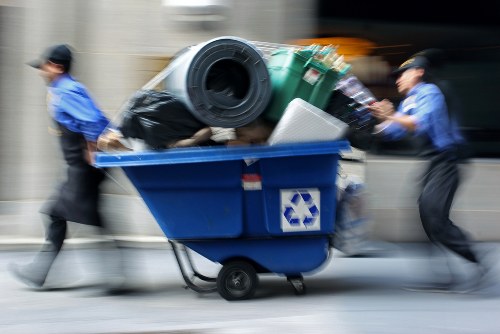
Bulky business waste is often the part that takes up the most room even when it is not the heaviest material on site. Desks, chairs, cabinets, shelving, tables and reception furniture can all become obstacles when a workplace changes layout or a property is emptied between occupiers. Our furniture removal work focuses on moving those items out efficiently and directing them to the right disposal route where possible.
If items are being cleared as part of a wider waste removal, it is useful to group furniture with the other agreed materials rather than treating each piece separately. That keeps the process simpler for offices, landlords and property managers who need a room, floor or unit made usable again. The same applies to broken or outdated fixtures: once they are clearly listed, they can be removed in one organised visit instead of lingering in corridors and storage areas.
When bulky waste needs extra planning
Some bulky items are straightforward to lift and load, while others involve awkward shapes, narrow access or the need to protect walls, floors and nearby stock. That is why the removal method is often as important as the item list. A concise description of the items, access route and any limitations helps the work move smoothly and reduces the chance of misunderstandings about what is included in the clearance.
Office clearances and workplace reset
Office clearances usually involve more than simply taking away old furniture. They often require a room-by-room approach so that waste, recyclable materials and items for retention are sorted properly. In practice that can mean removing desks, chairs, filing units, small fixtures, packaging and other unwanted materials while leaving documents, equipment and assets that must remain in the building. The service is intended to make that process more orderly and less disruptive.
Our office waste removal work is also useful when a business is reducing occupied space, moving out of a suite or refreshing a workplace that has accumulated too much unused material. The main benefit is not just removal itself, but the way a well-planned clearance supports a clean handover, a more workable layout and a more manageable stock of items on site. If you need to coordinate multiple areas, office clearance can be arranged around the specific spaces involved.
It is often worth deciding in advance whether paper records, electronics, desks and soft furnishings are all part of the same job. That way, the clearance can be grouped correctly and any item that needs separate treatment can be flagged before collection. One clear list saves time and makes the quotation process more accurate.
About Forest Hill
Forest Hill is a district in the London Borough of Lewisham, in south-east London, known for its mix of residential streets, local high streets and established cultural landmarks. One of its best-known institutions is the Horniman Museum and Gardens, founded by Frederick John Horniman, whose collections helped shape the area’s identity well beyond a purely suburban setting. The museum’s gardens and grounds form an important open space in the locality, while the surrounding streets include late nineteenth- and early twentieth-century housing that reflects phases of London growth beyond the historic centre. Forest Hill station, an important transport link in the district, connects the area with wider parts of south London and beyond, and the nearby Westow Hill and Sydenham Hill corridors help define the topography of the surrounding landscape. The district sits among the wooded rise of south London, where patches of green space and slopes give the area a distinct character compared with flatter inner-city neighbourhoods. South of the station and near the lower slopes, local streets and commercial frontages create a practical urban fabric, while nearby parks and tree-lined roads add a calmer atmosphere. The combination of transport access, long-settled residential streets and a strong cultural anchor has given Forest Hill a recognisable identity within Lewisham, with the museum, local shopping streets and nearby green spaces each contributing to the area’s everyday life.
Recycling, sorting and responsible disposal
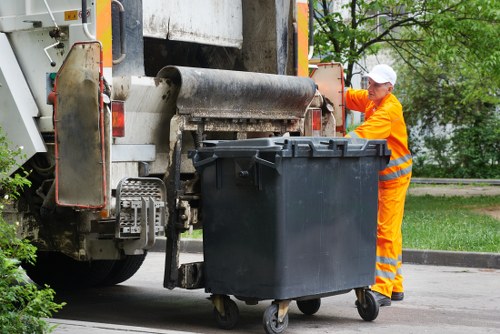
Good commercial waste removal is not just about carrying items away. It also depends on how those items are sorted before disposal and whether reusable or recyclable materials are separated from the rest. Cardboard, metals, certain plastics and clean bulky materials may be handled differently from general mixed waste, so the way a site is prepared can influence both the smoothness of collection and the disposal route that follows. This is especially important where a business wants the job handled with minimal wastefulness.
Our recycling and disposal approach is practical rather than decorative: items are reviewed for suitability, grouped sensibly and taken onward according to their type. That helps with office clearances, retail strip-outs and warehouse tidy-ups where several different waste streams appear together. Recycling and sustainability is therefore part of the wider service, not an afterthought. It is also one reason why giving a clear item list matters before the work is booked.
In many cases the best preparation is simple. Keep agreed items together if possible, separate anything that should not be mixed, and note whether there are stairs, narrow entries or loading constraints. A little preparation at the start can make the removal process more efficient and reduce the chance of onsite adjustments. Use that information to request a quote and set expectations for the job.
How to prepare a commercial clearance
Preparation for commercial waste removal should be short and practical. The most useful details are the type of items to be taken, the approximate quantity, where they are located, and whether there are access restrictions such as steps, locked doors or limited parking. Photographs can help if the waste is mixed or if the area is cluttered, but a written summary is just as important because it clarifies what is actually included in the work.
If the job is linked to a tenant change, refurbishment or stockroom reset, it also helps to distinguish between waste and retained items before collection day. That prevents the wrong materials being moved and avoids any confusion about fixed fittings, personal possessions or sensitive documents. Contact us when you are ready to discuss the items and the best way to handle them. A concise brief leads to a more accurate plan.
Where possible, leave a clear path to the items being removed and keep any special instructions in one place. That can include loading times, building entry rules and the name of the person who can confirm the agreed scope on the day. These are small points, but they make a real difference on busy commercial sites.
Pricing factors and quotation details

Commercial waste removal pricing usually depends on the amount of material, the type of waste, how easy it is to access, and whether the items need additional sorting or handling. A straightforward load from a ground-floor business unit is different from a clearance that involves multiple rooms, stairs, or mixed materials. The quotation therefore works best when it is based on the actual conditions rather than a rough guess.
There is also value in being clear about any items that are not to be removed. That reduces the risk of accidental inclusion and helps keep the work focused on the agreed waste. For businesses comparing options, the important question is not only how much needs to go, but how the job should be organised. If you need to book online, that can be a convenient way to pass on the basic details and request the next step.
For a quotation, please send the item list, access notes and preferred timing. If the waste is mixed or the site is busy, that information is especially helpful. We can then shape the service around the practical realities of the premises and keep the removal process as clear as possible from start to finish.